So every once in a while, I like to go through my writings from previous years. And more often than not, I end up cringing at what I wrote.
Recently I came across an article from about four years ago (I was 18!) where I claimed to have understood the art of negotiation 🫡
Funny now that I think of it. But here’s exactly how I concluded that piece:
“1) Be clear with what you want.
2) Be clear with what the other person wants.
3) Align the incentives.
This is all it is about. Incentive alignment.”
Easy-peasy. No?
Well… only if someone could have told my then “enlightened soul.”
Anyway, I want to use that as a base to communicate my current understanding of negotiations. More so human negotiations, and why they are so complex.
The difference this time is that I am not interested in claiming mastery, nor am I particularly interested in the “art” of it. I want to understand what in the world “negotiation” actually is.
And to be fair, what I wrote back then wasn’t completely bad but it was just too simplistic.
Let’s build on it!
1) Be clear with what you want.
Oh boy. You won’t believe how hard this actually is.
People think they know what they want. But most don’t even know what to want in the first place.
Some know what they want, but don’t know how to communicate it in the right manner. Some can communicate what they want, but don’t really mean what they say.
And some people are, well… in delulu.
Clarity is definitely not a given. It’s work. Hard work.
2) Understanding what the other person wants.
This is where you have to get out of your own head.
There are hidden agendas, hidden motives, uncertainties, masks. Humans beat around the bush like it’s a sport! Crazy games people play 🤐
People rarely ask for what they want. They ask for what feels safe to request.
What they truly want is buried under multiple layers of ‘entropy’ – fear, pride, validation, habit, love, connection, power, etc.
It’s almost like they are ashamed of wanting what they want.
So they wrap it in stories, narratives, half-truths and convenient fictions.
One thumb rule I’ve learned:
Negotiate the motive beneath the request, not the request itself.
3) Align the incentives
Here’s something very important:
You have to go beyond just incentive alignment.
You literally have to engineer predictability, trust, shared narratives and boundaries.
All this helps to create a lower-entropy baseline that makes future negotiations easier.
You can’t just reduce entropy in the ‘agreement!’ You have to make efforts to reduce entropy in the relationship.
So what is a negotiation?
On the surface, it looks like a game of offers and counter-offers.
But underneath, the default human trajectory is: misunderstanding,misaligned incentives, emotional noise and unclear boundaries.
Left alone, everything drifts toward chaos.
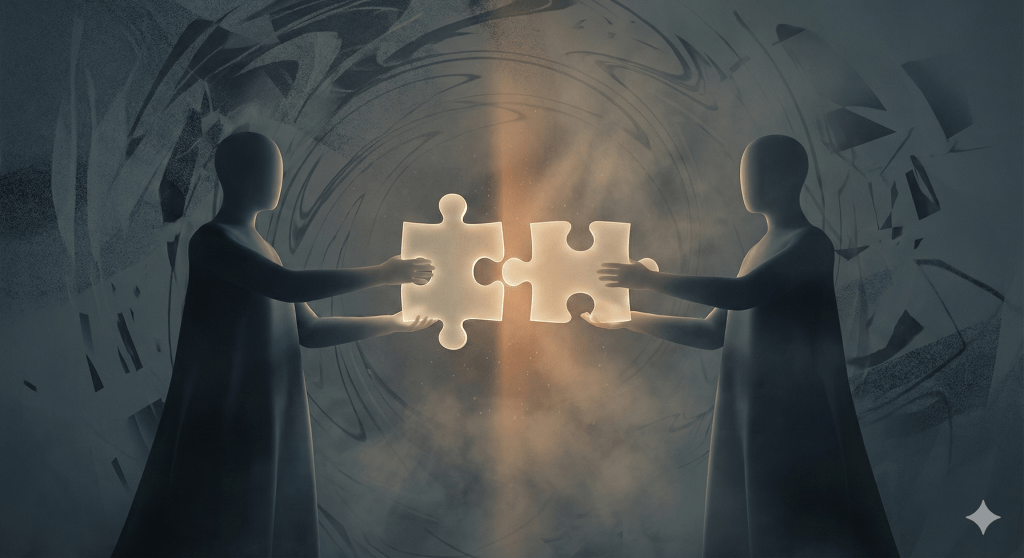
Negotiation arises when two or more entropic systems (two or more humans) try to align their desires without dissolving into conflict. But desire itself is entropic. It shifts, contradicts itself, mutates, destabilizes.
To negotiate is to momentarily stabilize desire long enough to express it.
4 years ago, I ended the article with my understanding of the ‘art of negotiation.’
Today, I’ll end with the ‘why’:
We negotiate mainly because:
The world keeps slipping toward uncertainty + we fear the chaos inside each other and so… We crave predictability. Even if temporary.
 Yes, the logo needs to change.
Leave a comment