The spiral of metamorphosis
Nietzsche + Kafka, read as a cycle that deepens
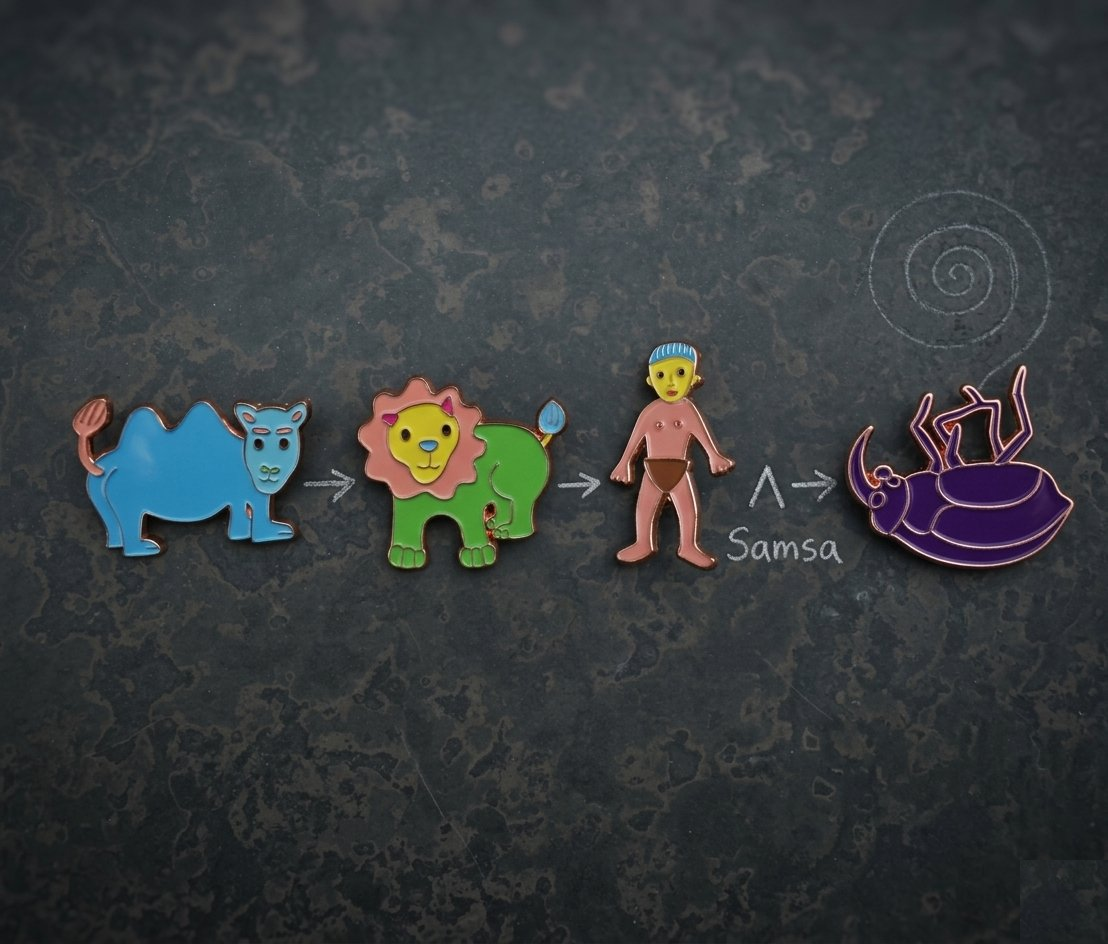
The spirit passes through four stages: bearing, rebelling, creating, and breaking. But the breaking isn’t the end. It feeds the next revolution. Each time around, the figures grow larger, more vivid — the camel’s burden becomes intentional, the lion’s roar precise, the child’s innocence earned, and the beetle’s shell cracks to let light through. Select a figure to explore.
The camel
The spirit that bears
1Bears without knowing why. Duty, obligation, the weight of “thou shalt.” Gregor Samsa before his transformation — waking at dawn to service his family’s debt, carrying a burden he never chose.
2Bears knowing why. The suffering is recognized, named, but still accepted. The camel kneels not from ignorance but from understanding that some weight must be carried before it can be refused.
3Bears and chooses. The weight becomes soil. What was crushing obligation transmutes into purpose — the roots that fed from burden now sprout green. Amor fati: love of one’s fate, weight and all.
The lion
The spirit that rebels
1The first roar. A raw, undirected “no” — anger at the weight, fury at obligation. The spirit discovers it can refuse, but doesn’t yet know what to build in place of what it destroys.
2Roars knowing what it destroys. Rebellion becomes precise. The lion doesn’t just say “I will not” — it says “I will not because I see what this costs.” Destruction with awareness.
3Roars to create space. The full blaze. Destruction is no longer reactive but generative — clearing ground for the child that follows. The lion’s fire becomes the forge.
The child
The spirit that creates
1The innocent yes. Creates without knowing the wheel exists. Nietzsche’s “sacred yes” — a new beginning, a self-propelling wheel. Beautiful, but fragile. It doesn’t know the fall is coming.
2The brave yes. Creates knowing the fall is coming. This innocence has been through the beetle once and survived. It says yes with one eye on the exit — resilience wearing innocence’s clothes.
3The sacred yes. Innocence on the other side of knowledge. The wheel behind the child is Nietzsche’s self-propelling wheel — but now it also echoes every past revolution. It creates not despite the beetle, but having integrated it.
Samsa
The spirit that breaks
1Kafka’s Gregor wakes as vermin. The first collapse — uncomprehending, total. The spirit that bore too much without rebelling falls straight from camel to insect. A sealed shell.
2The shell cracks. The breaking is recognized as part of the pattern. Light begins to leak through the fractures — not yet transformation, but the first sign that destruction isn’t terminal.
3The composting. Green light spills through the cracked shell and drifts upward toward the next child. What was crushed becomes the richest soil. Samsa is no longer tragedy — it’s the necessary fermentation between one creation and the next.
Leave a Reply